ReformEat
A New Way to Precisely Design Snacks Whilst Putting Nutrition First.
Role
Hardware Engineer
Software Developer
Timeline
2025
Role
Hardware Engineer
Software Developer
Timeline
2025
Nutrition Reformatted
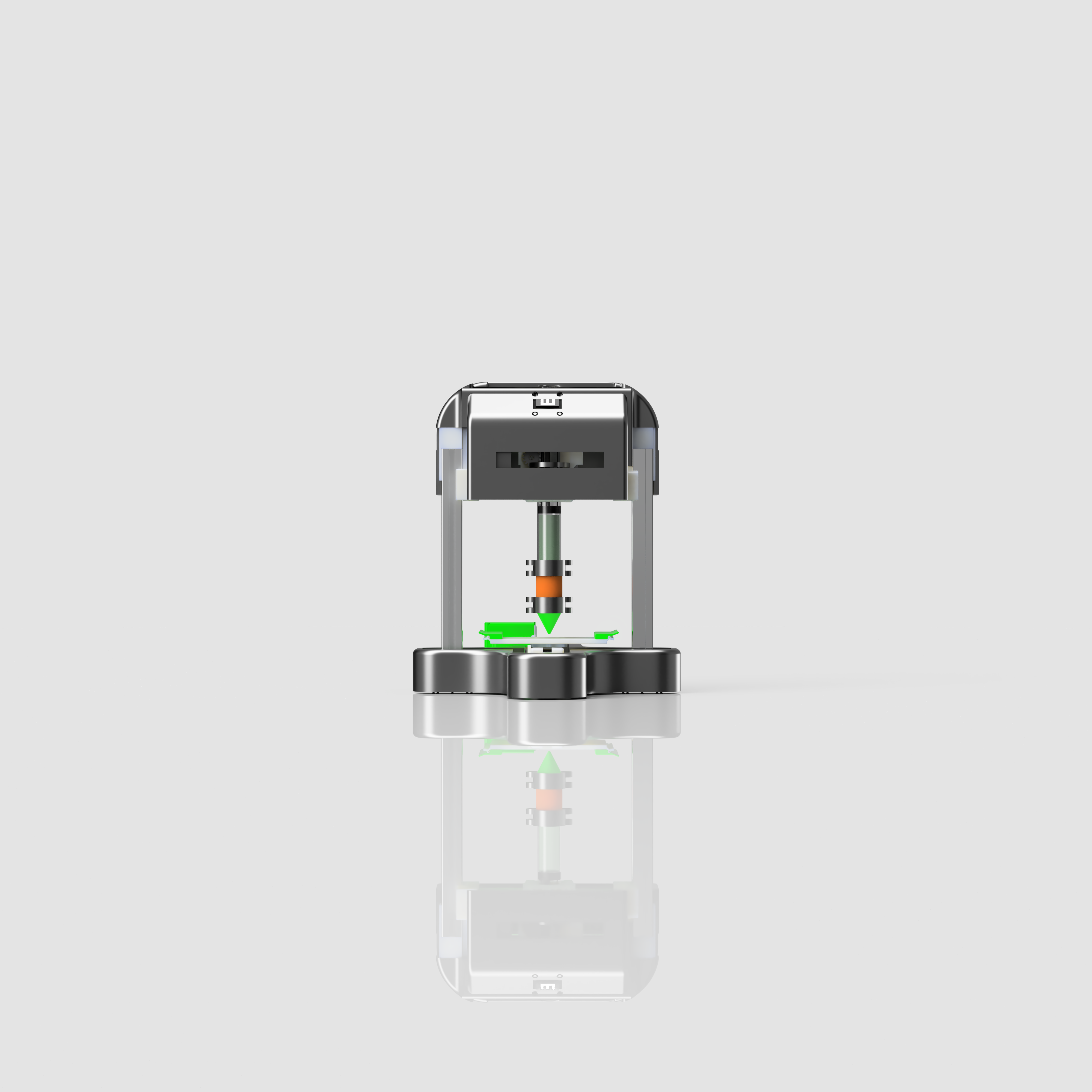
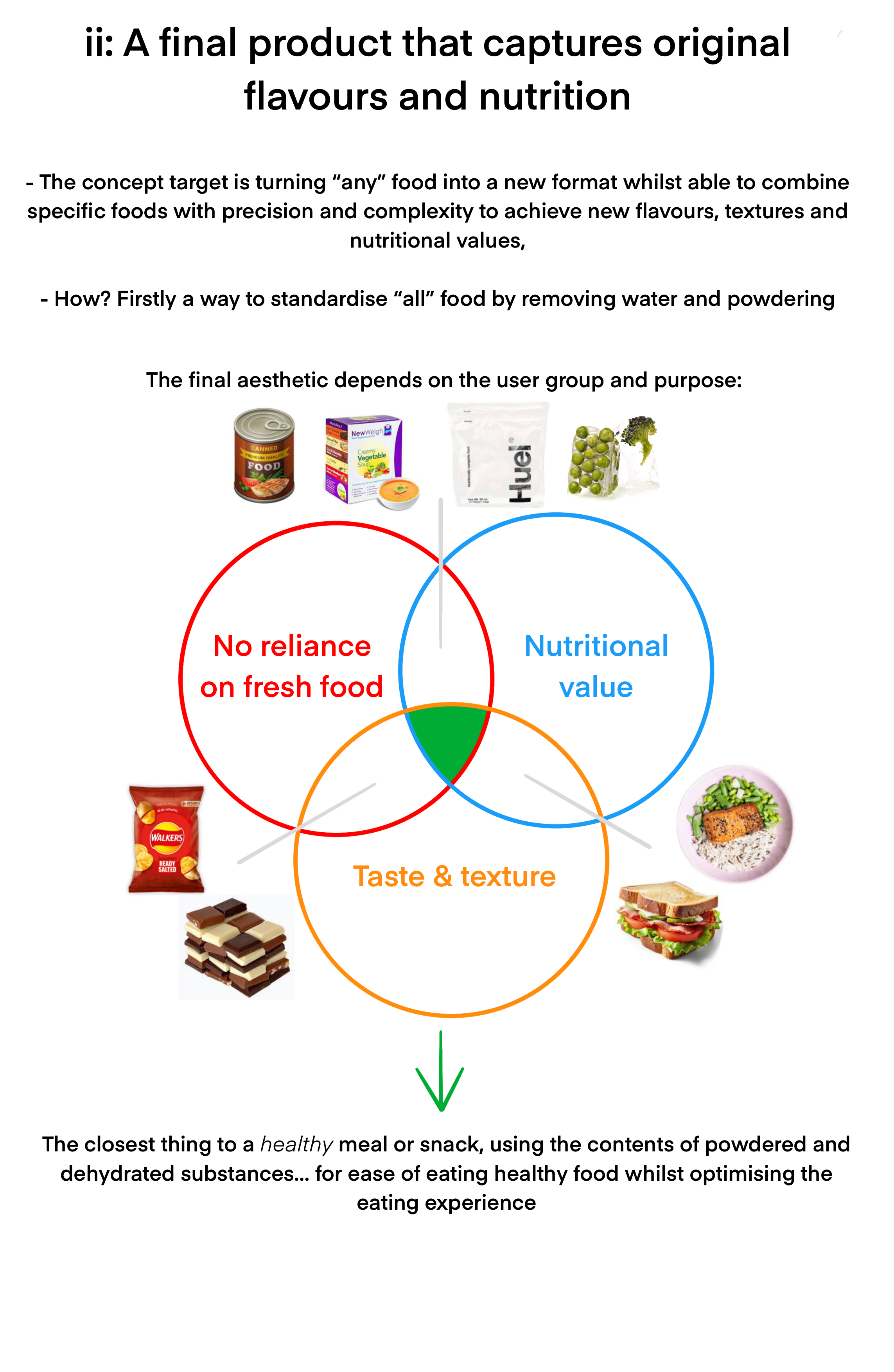
ReformEat revolutionises food design by offering a zero-waste fabrication system. We built a platform that allows users to precision-engineer their nutritional intake through rapid 3D gelatine-based manufacturing.
100%
Personalised
0
Waste
3D
Fabrication
Phase 01 • Ideation & User Research
Defining the Problem Space
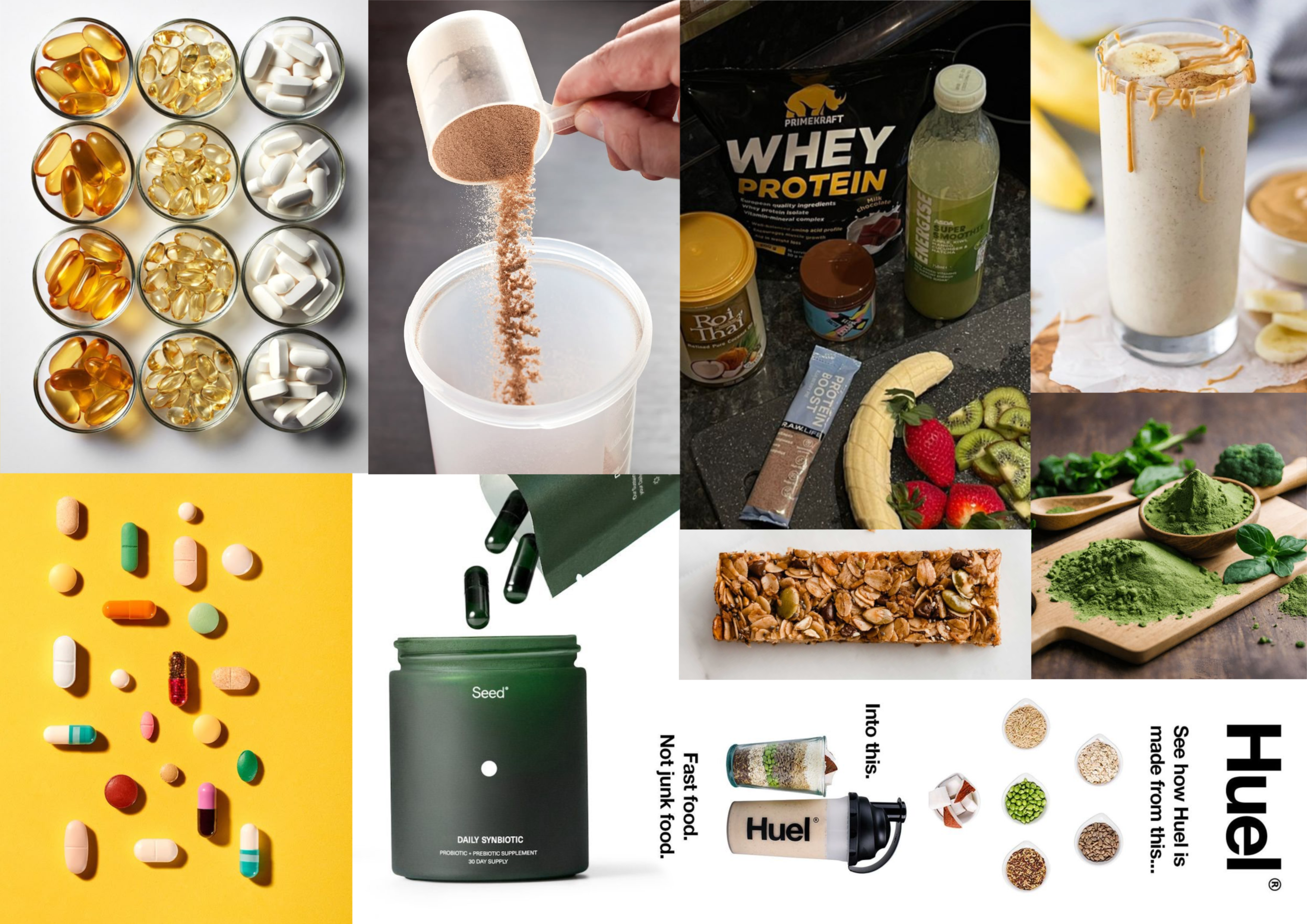
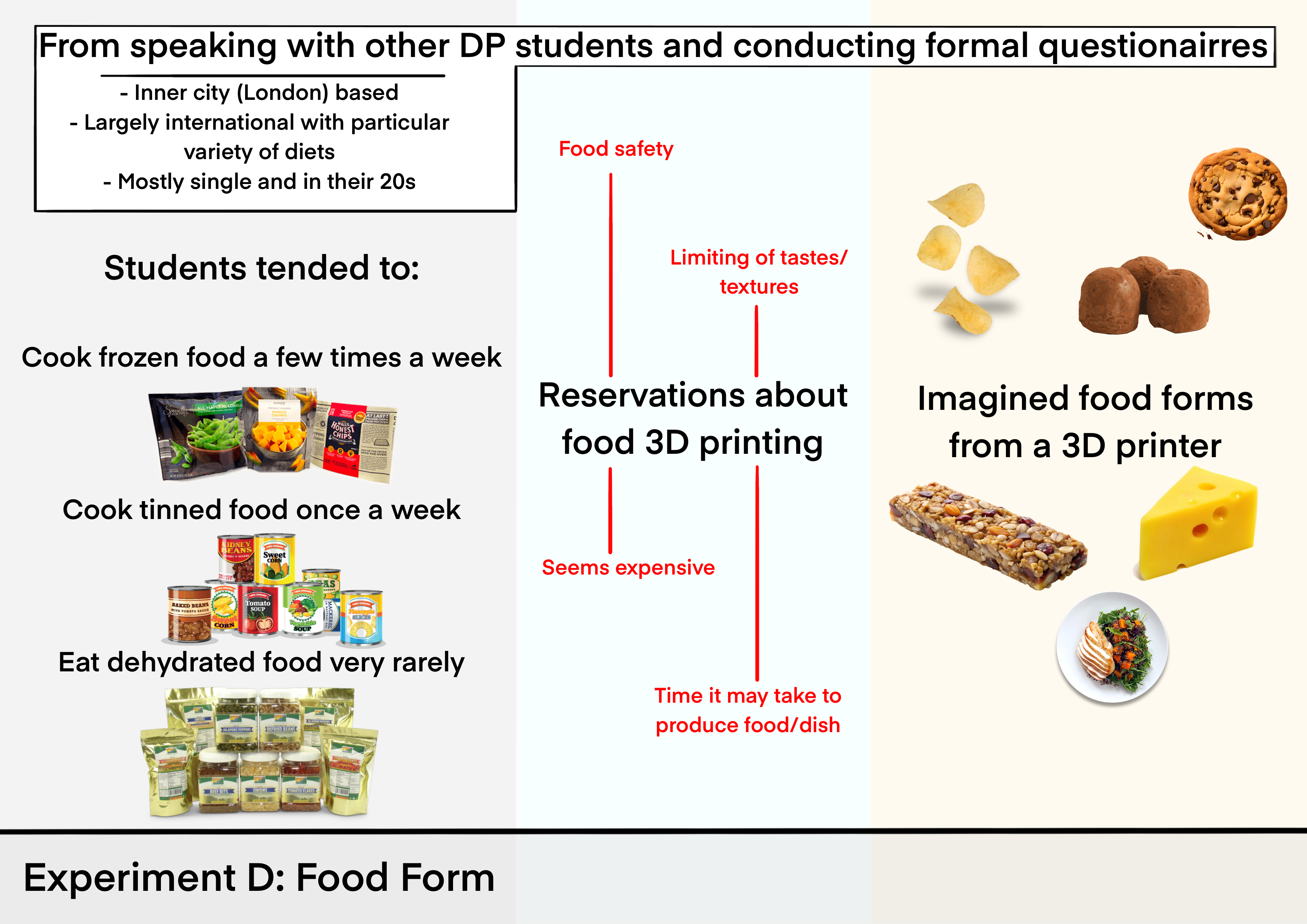
Before engineering the hardware, extensive research was conducted across two primary domains: mitigating domestic food waste and seamlessly tracking nutritional intake. Click the panels below to view the research methodology and findings.
Reducing Food Waste & Hygiene
Focus: Post-purchase behavior in the home .
Target Demographics
- •Individuals who cook heavily and keep leftovers, or students/singles prone to overcooking .
- •Large households, specific dietary plan followers, and environmentally minded bodies .
- •Elderly or disabled individuals requiring simplified waste management tools .
Key Variables & Unknowns
- •The proportion of food wasted at home and the main sources (leftovers, fresh meat, veg) .
- •Frequency of leftovers, composting capabilities, and packaging solutions for short shelf lives .
Market Precedents
- - Dynamic expiry labels (Innoscentia measuring VOCs, BlakBear detecting Ammonia) .
- - Smart indoor composters and vacuum sealers (FoodSaver) .
- - Food waste apps like Too Good To Go .
Methodology
- - Analyze sampled data across demographics .
- - Interview users of existing products and supply chain stakeholders .
- - Conduct focus groups and consult health boards .
Tracking Nutritional Intake
Focus: Effective analysis with minimal user input .
Target Demographics
- •Users affected by obesity or dietary conditions, and those consulting nutritionists .
- •Individuals with dietary intolerances or cutting certain foods from their lifestyle .
- •Parents seeking to track their children's eating habits .
Key Variables & Unknowns
- •How optimal diets are calculated and how exercise/beverages affect dietary needs .
- •The scale of health problems tied to poor nutrition and triggers for positive behavior change .
Market Precedents
- - Mobile apps (NHS Weight Loss Plan, MyFitnessPal) .
- - Hardware like Lumen (metabolism via breath) and smart food scales .
- - Smart refrigerators (Samsung Hub) and compartment-weighing plates (SmartPlate) .
Methodology
- - Interview health/nutrition experts and existing app users .
- - Observe users in natural environments interacting with current tools .
- - Request users maintain detailed meal diaries .
Phase 02 • Experimentation
Material & Form Iteration
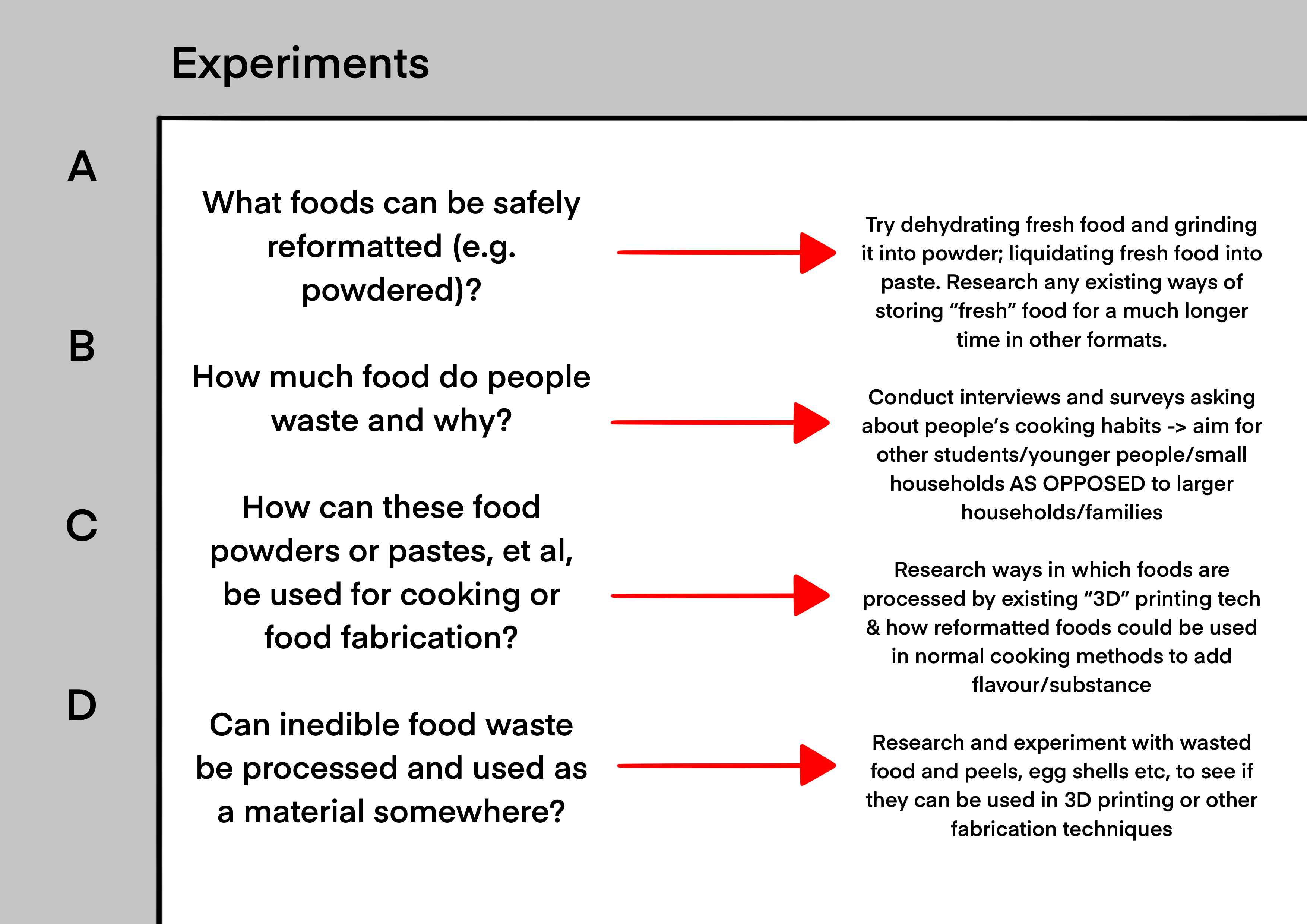
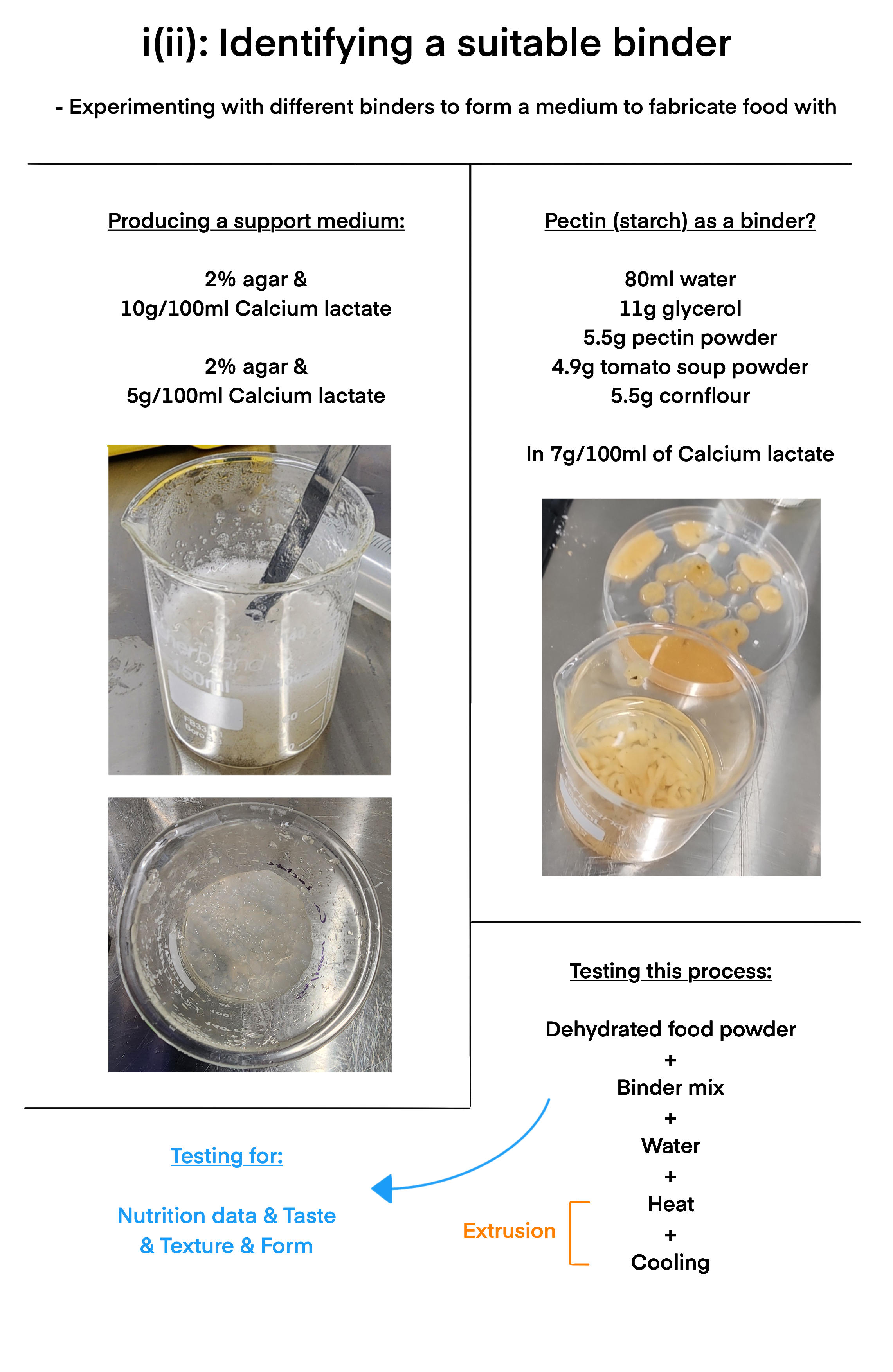
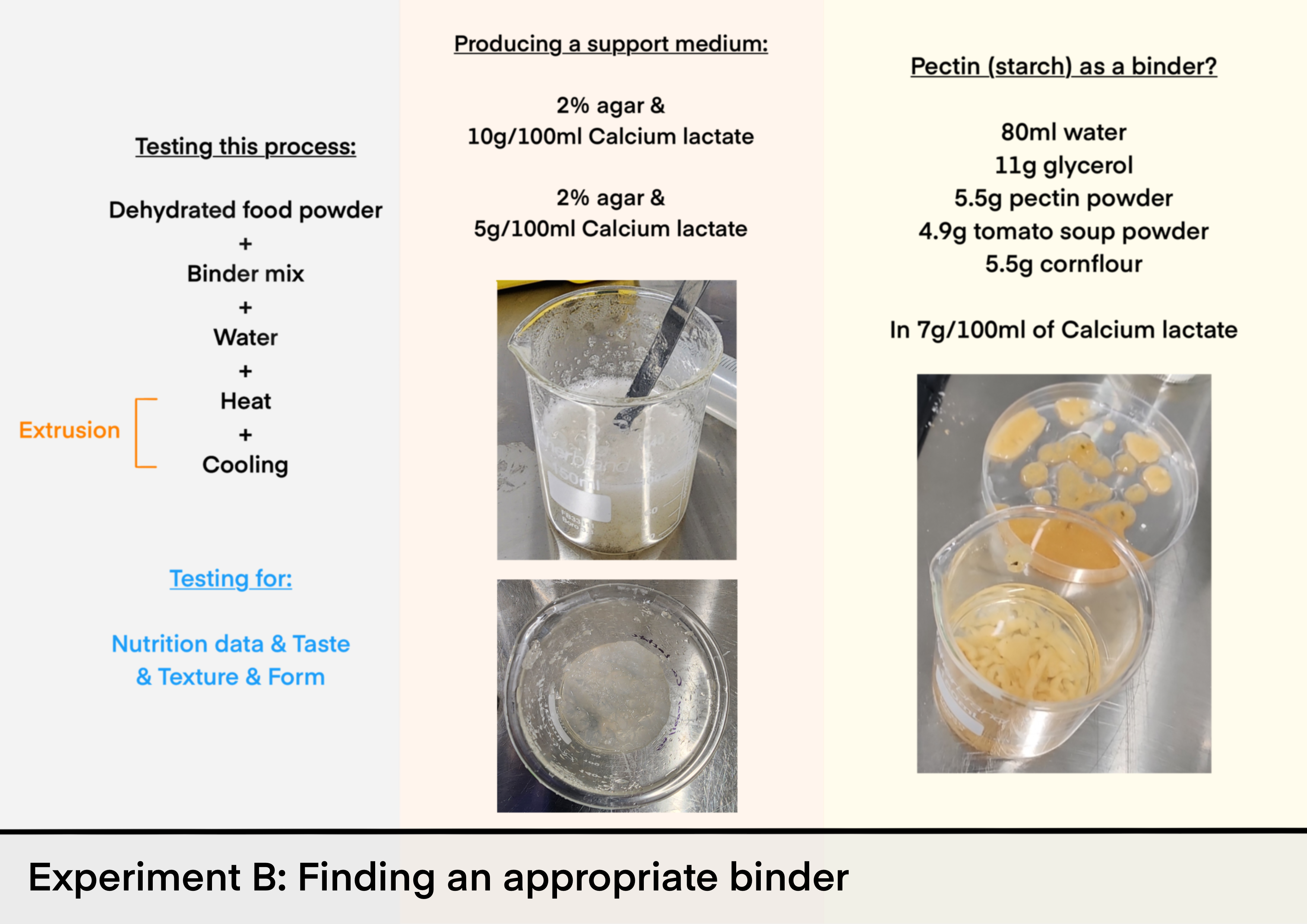
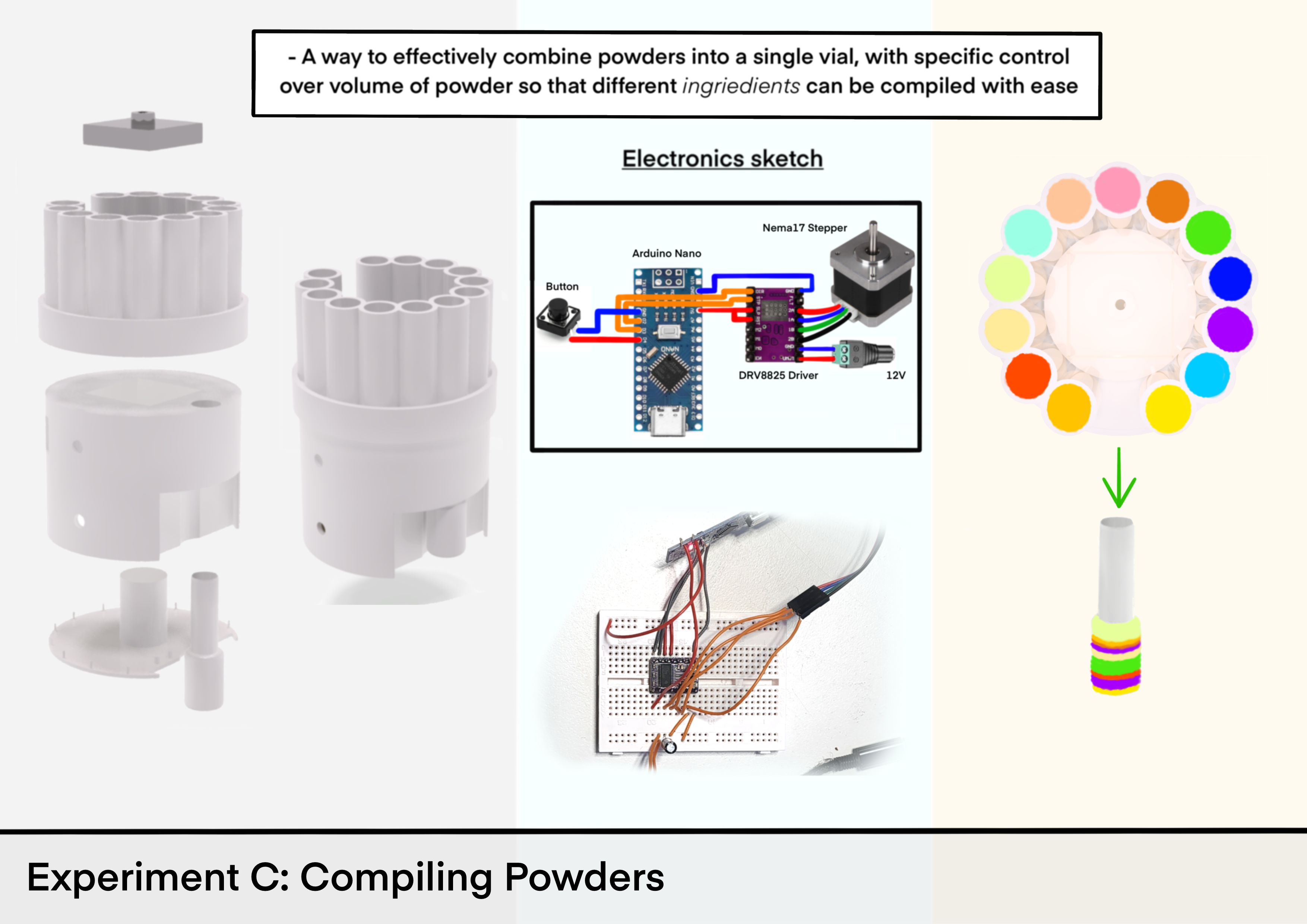
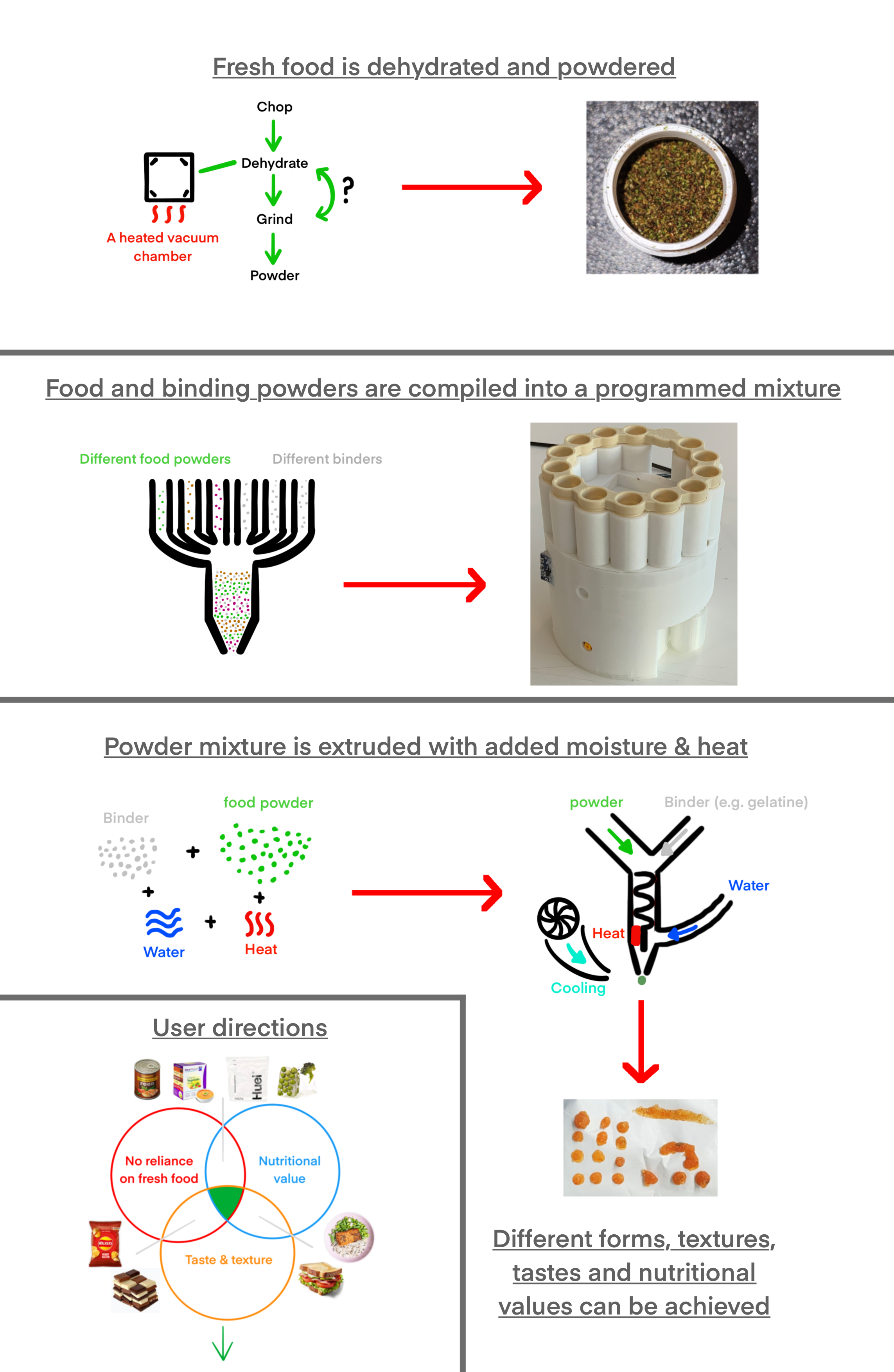
Translating research into physical prototypes required an exhaustive exploration of biomaterials, 3D lattice structures, and gelatine curing behaviors to ensure food safety and structural integrity.
Phase 03 • Extrusion Design
Conceptual Evolution
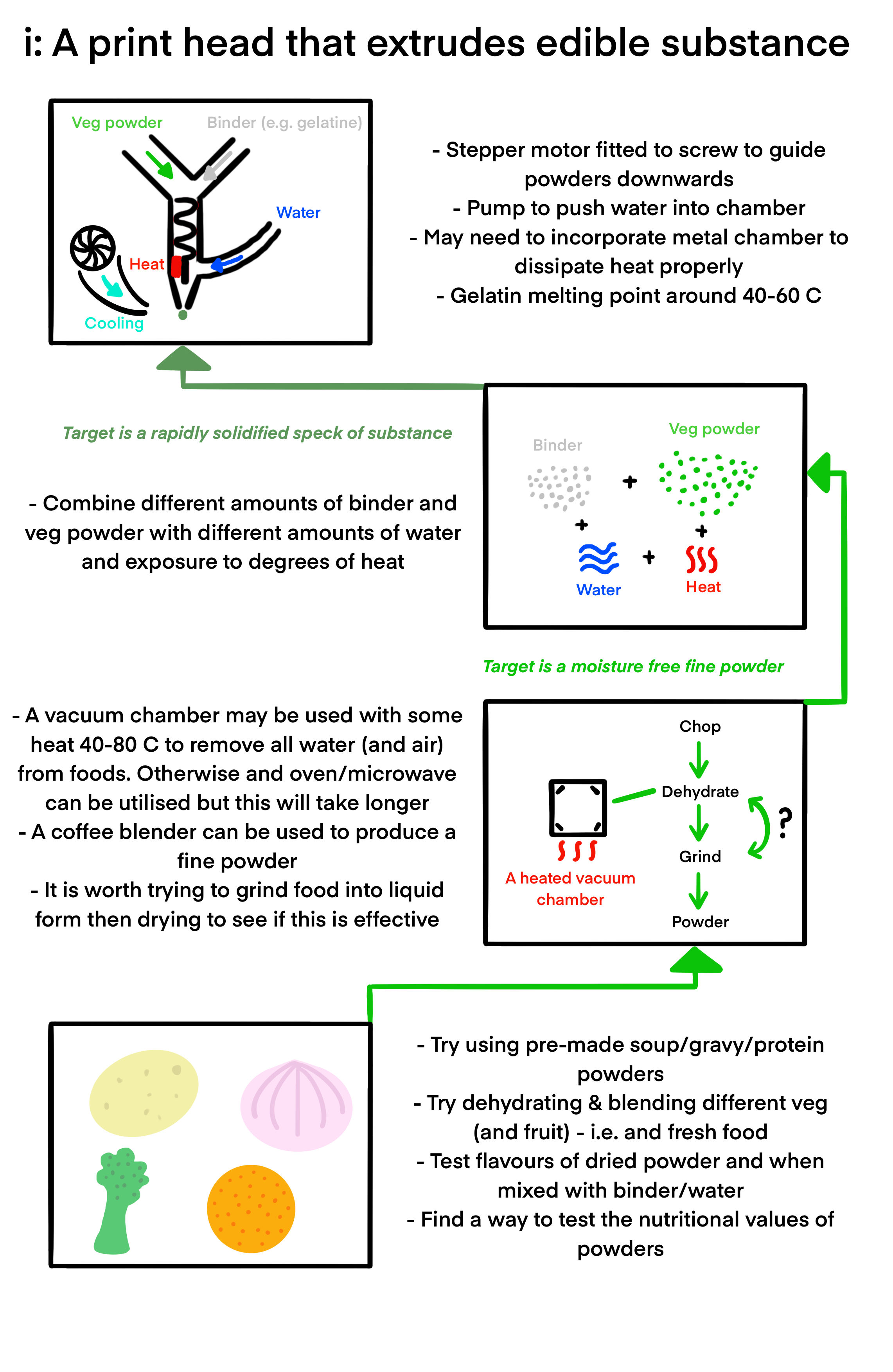
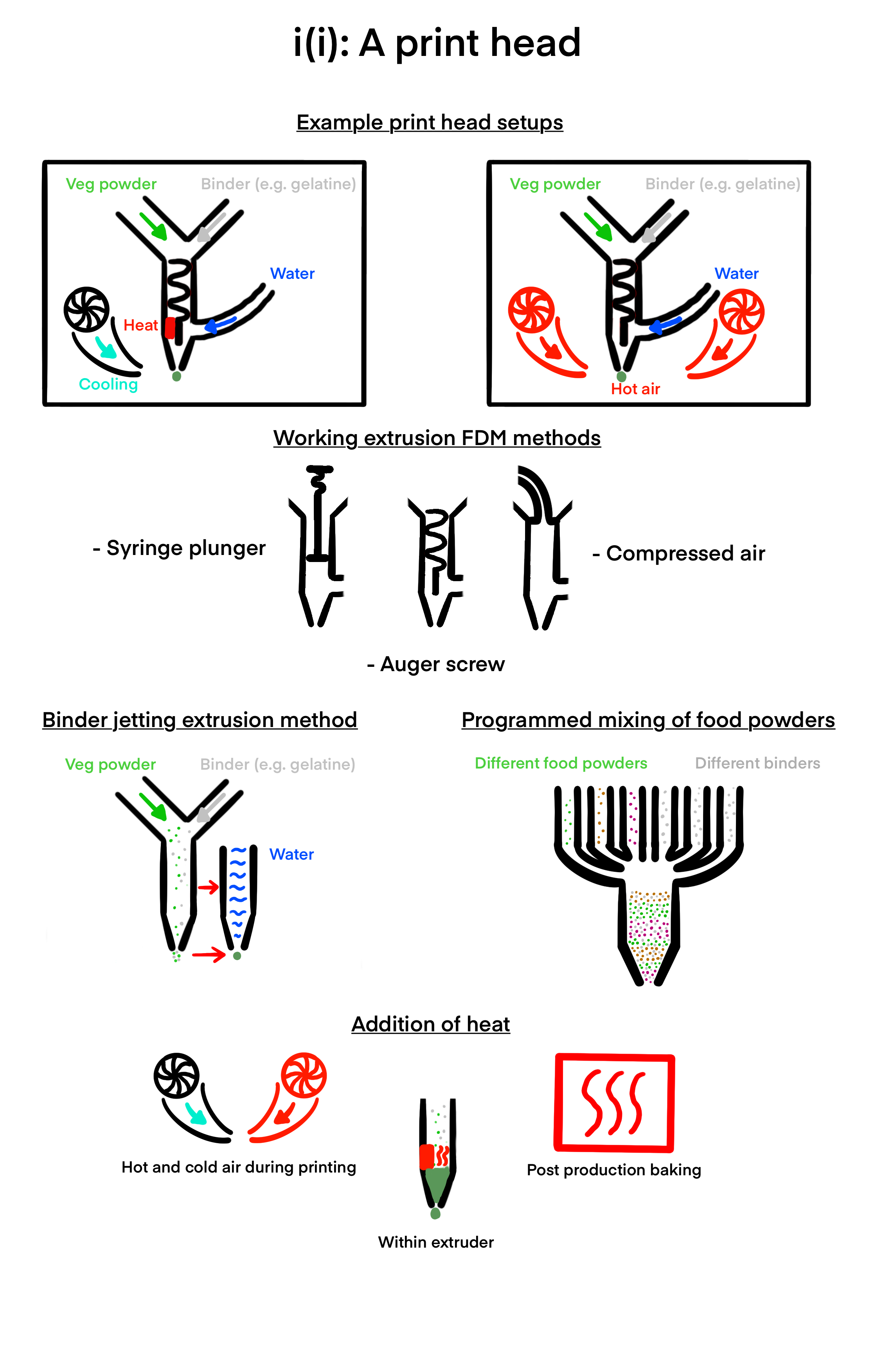
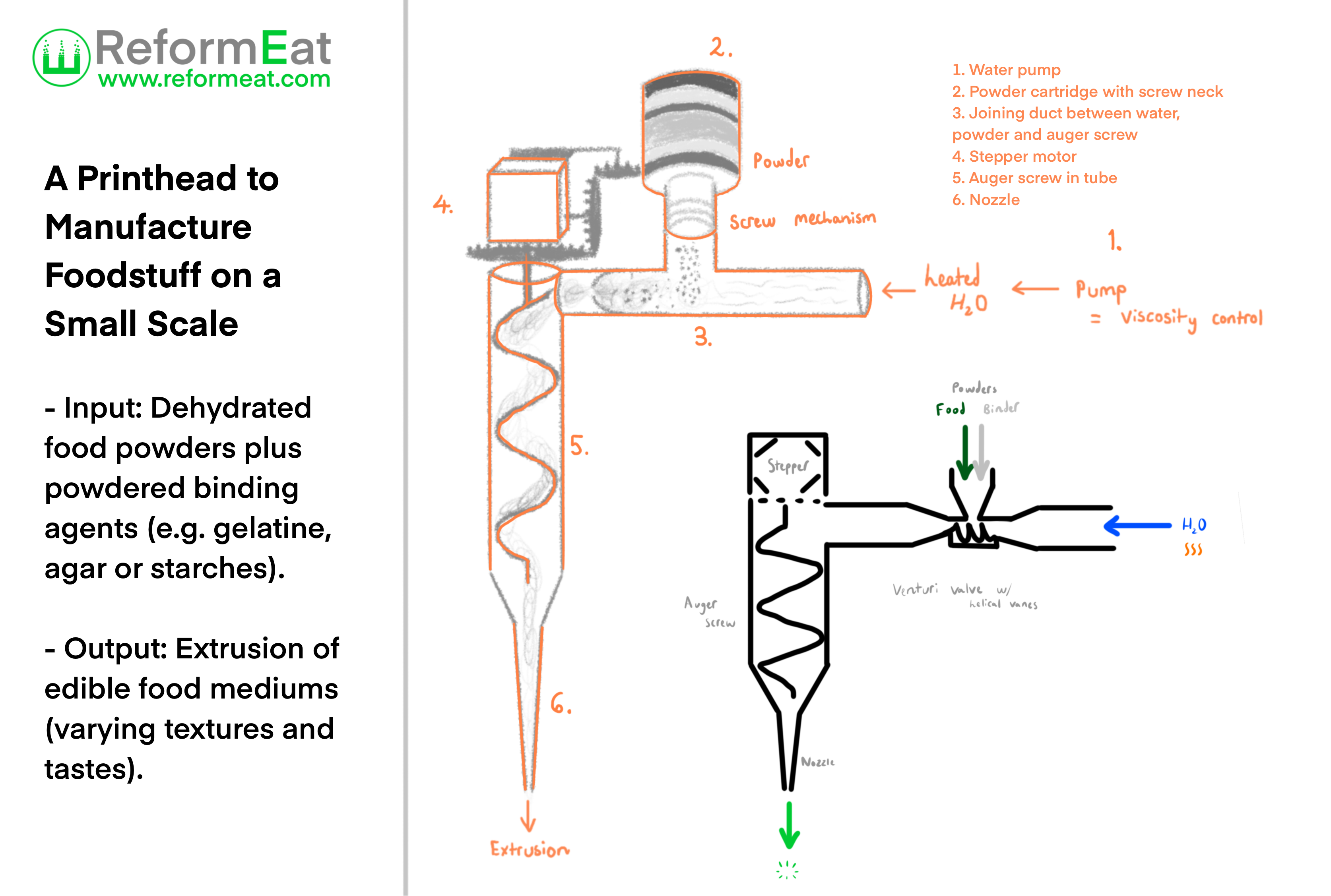
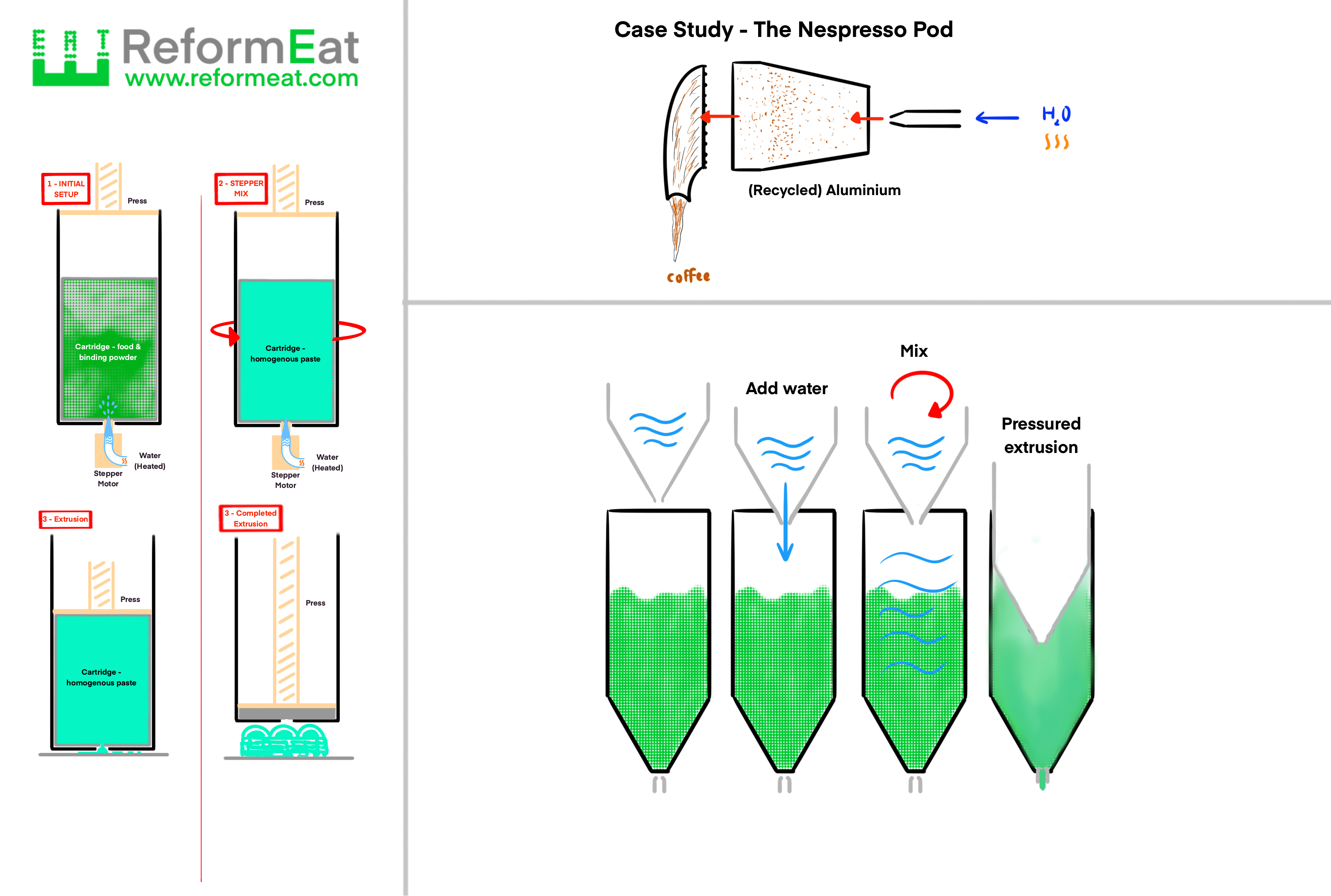
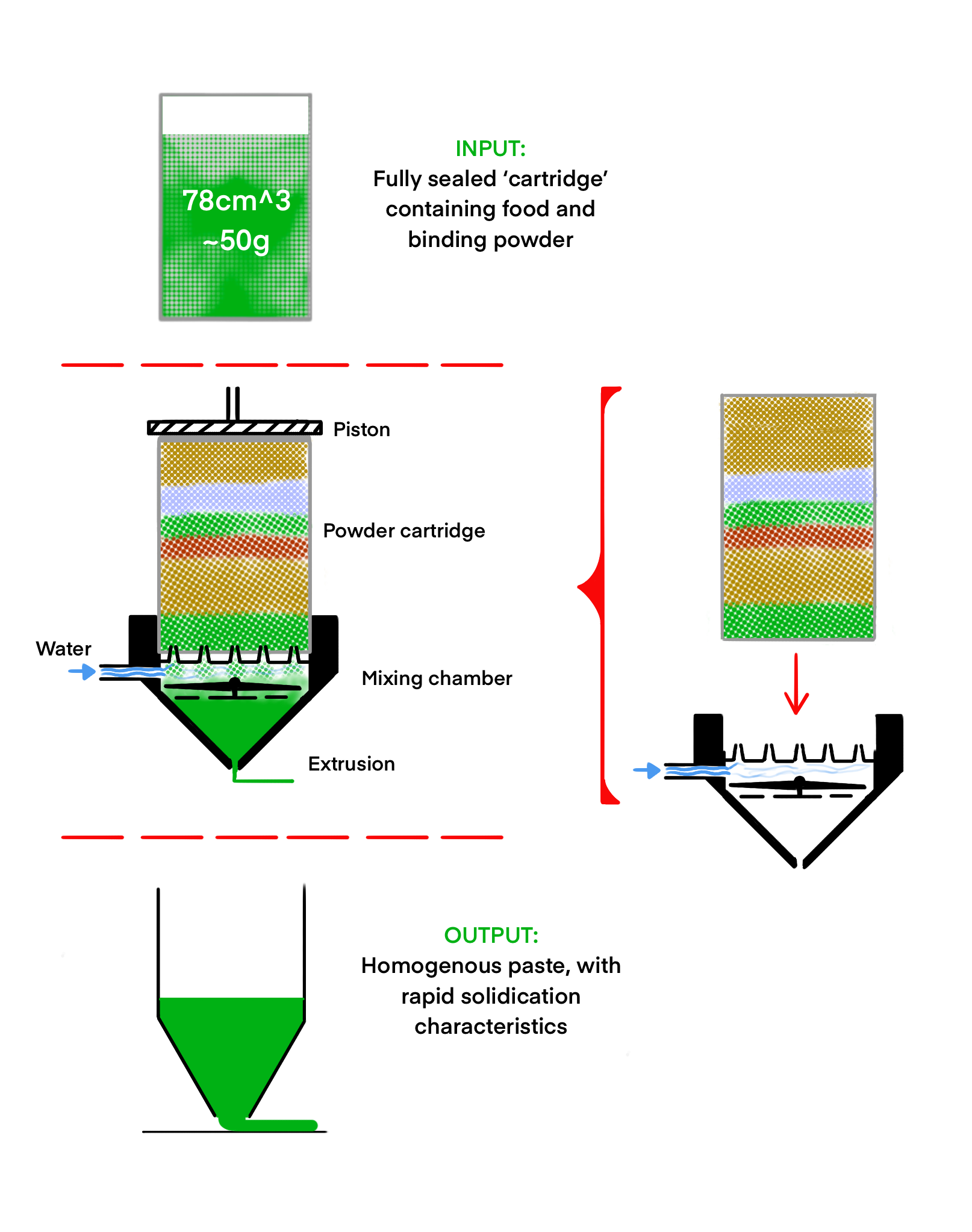
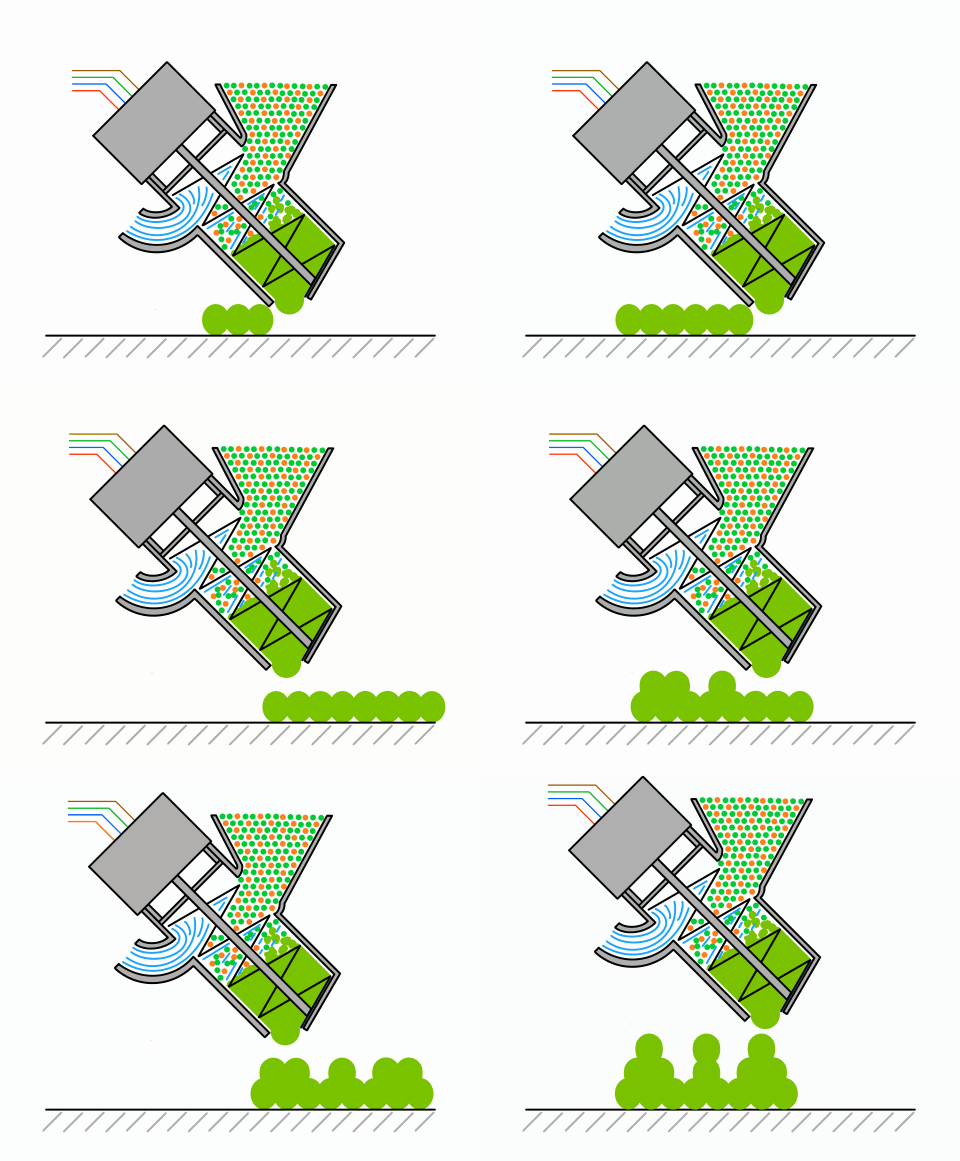
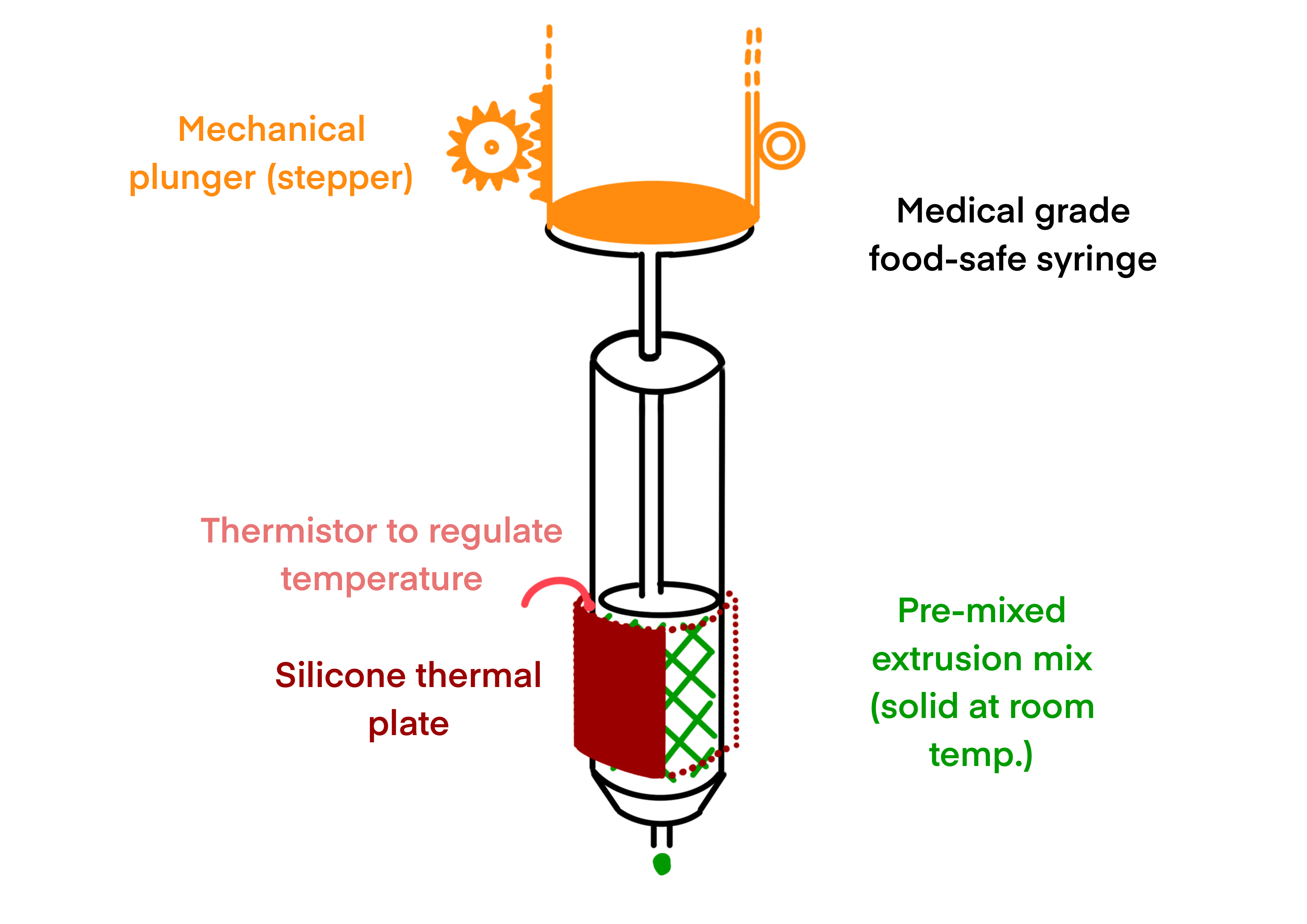
A critical engineering hurdle was designing a custom extrusion system capable of handling highly viscous, temperature-sensitive food-grade gelatine without clogging or stalling.
Phase 04 • Build & Development
From CAD to Reality
Translating the finalised digital architecture into a functional prototype. This phase involved rigorous testing of the mechanical plunger, validating the silicone thermal plate's heat distribution, and observing the gelatine's extrusion rheology in real-time.
01. Initial Extrusion Test
02. Syringe Loading
03. Final Apparatus
Cold Water + Gelatine Powder
Warm Water + Food Powder
Dissolve gelatine mix over low heat.
Stir in food paste until homogenous.
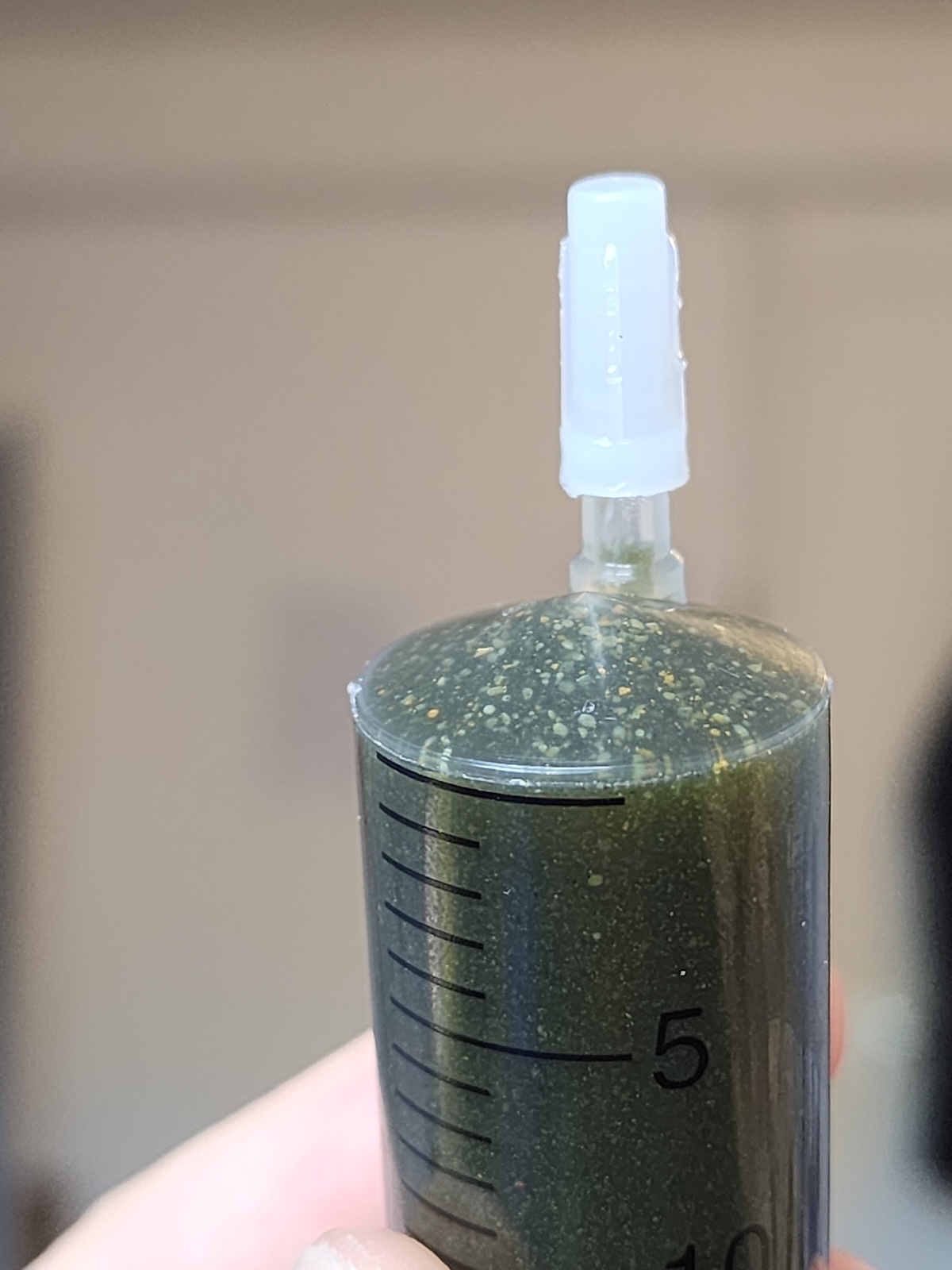
Pour homogenous mixture directly into the extruder syringe and leave to set.
Refrigerate setup. The casted material can safely last up to 2-3 days before extrusion.
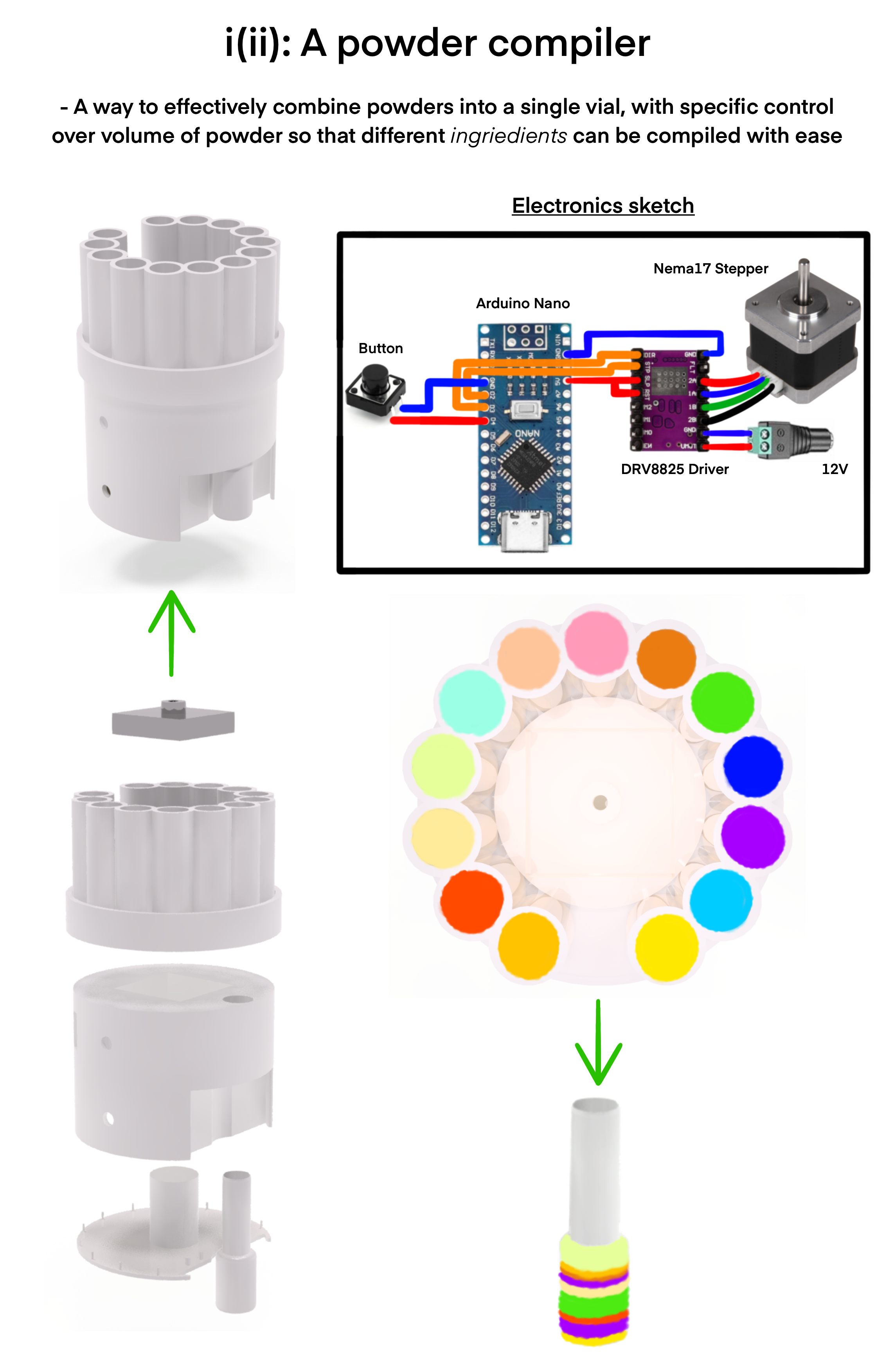
SKR V1.4 Mainboard
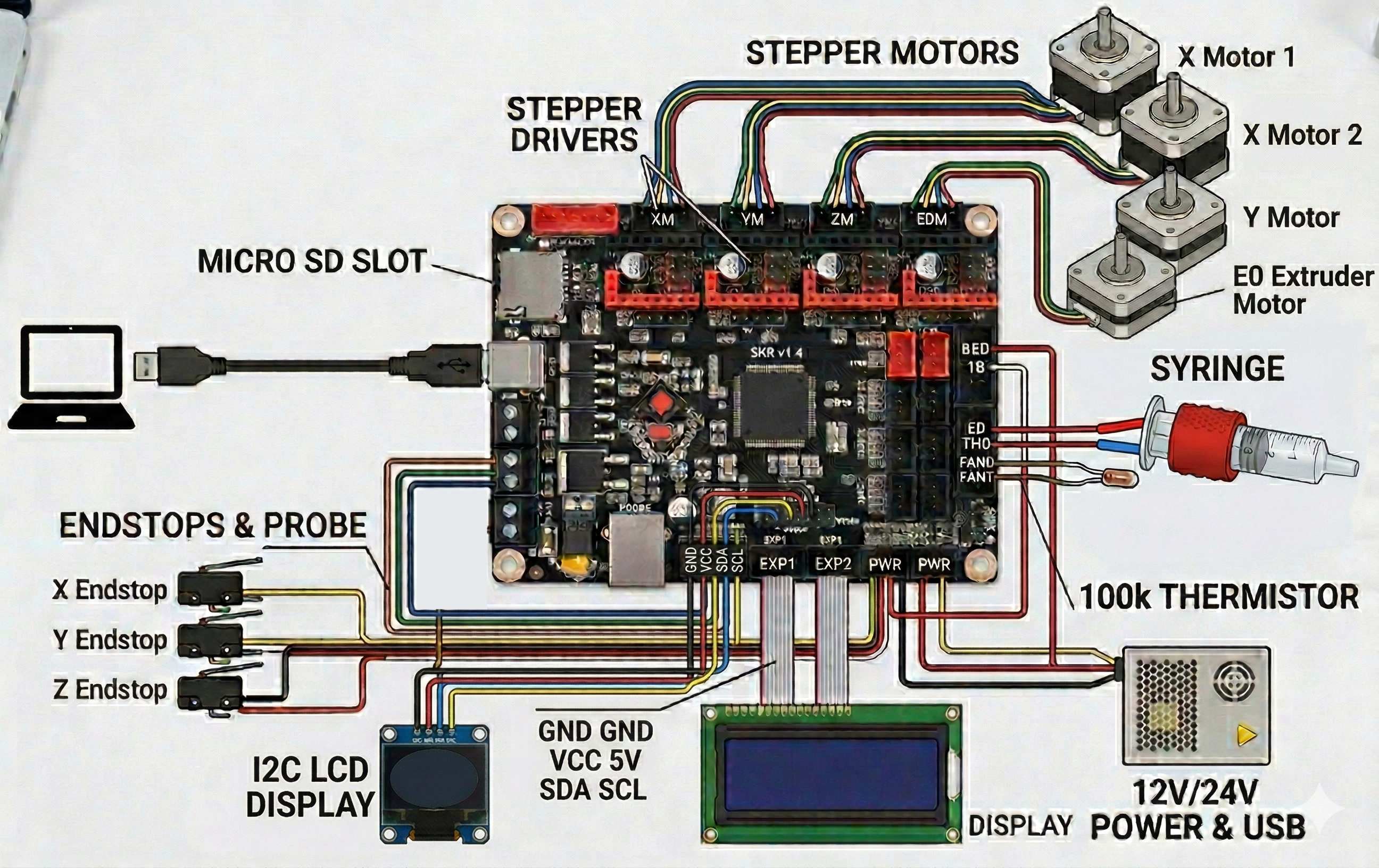
I settled on the SKR V1.4, which is a fairly widely used board in the DIY 3D printing world, and encompasses the MARLIN firmware. A 24V power supply was sourced and safely wired up with a switch and power adapter.
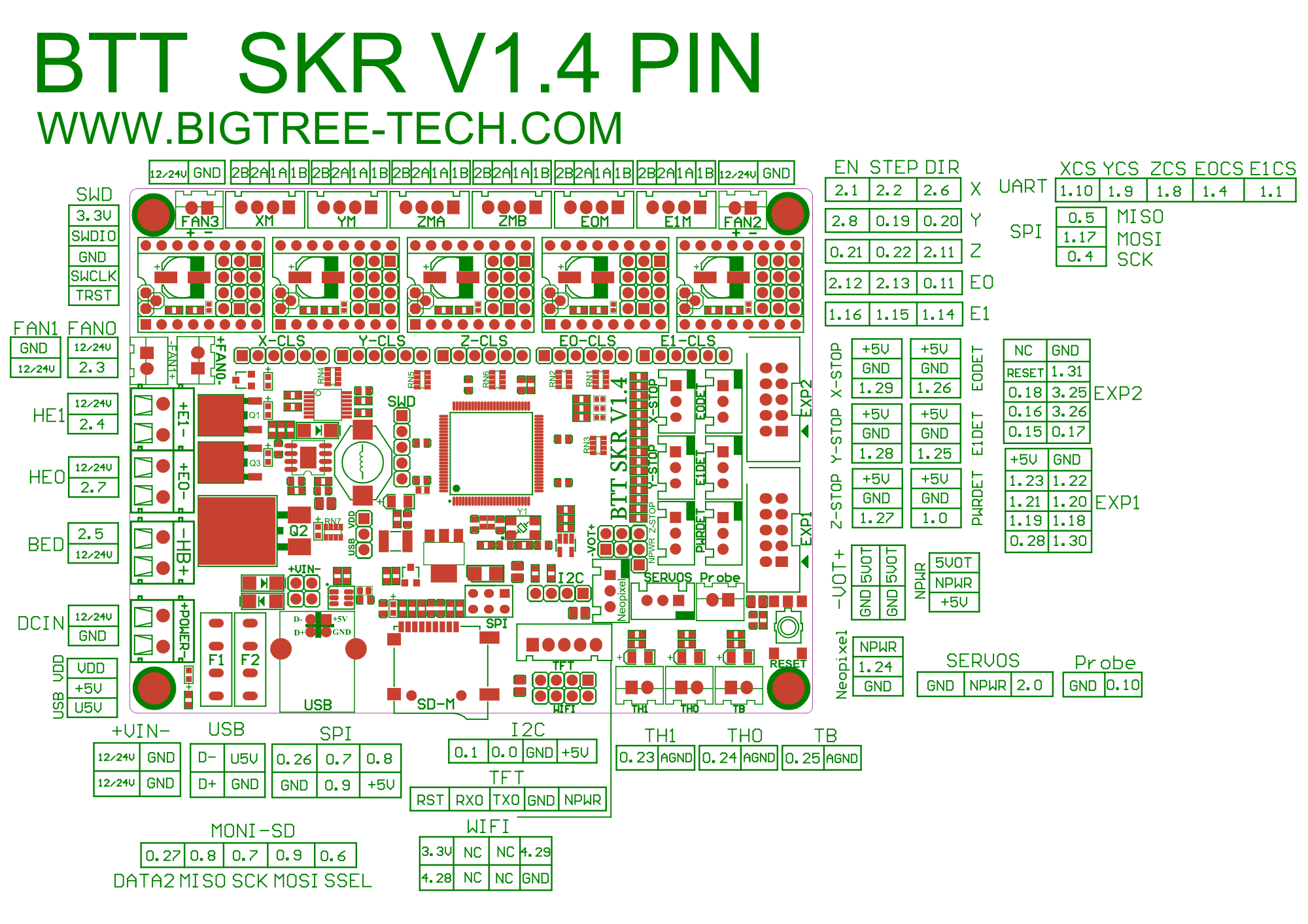
Step 01: Base Frame
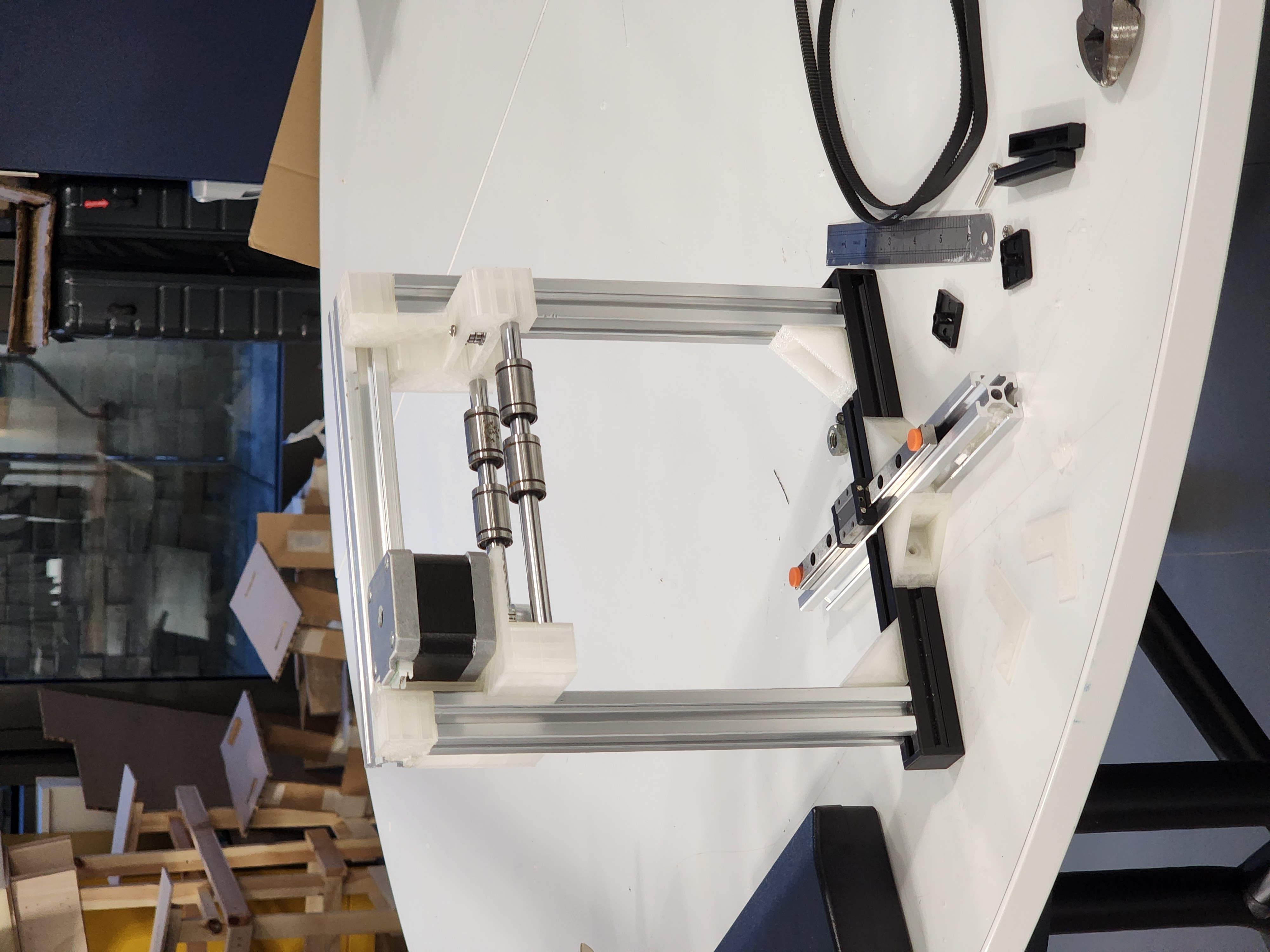
Physical Build
Phase 05 • UI & Software
Food Design Interface
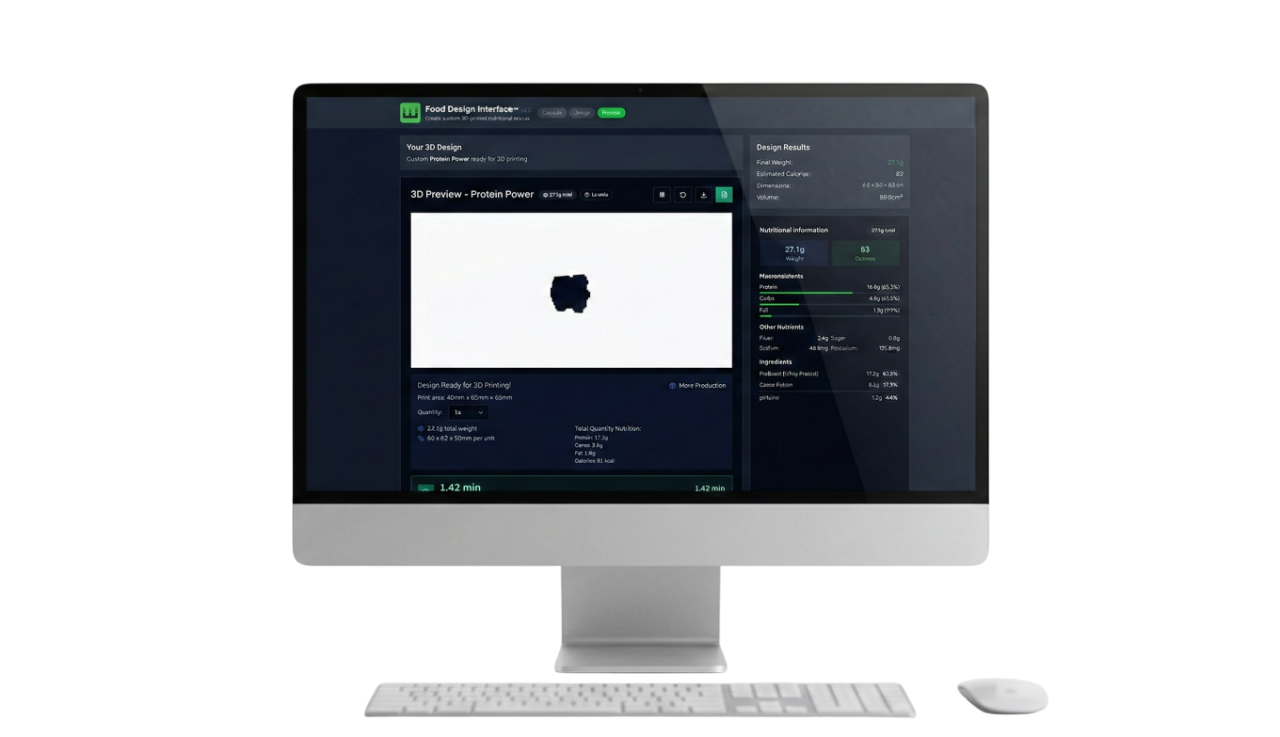
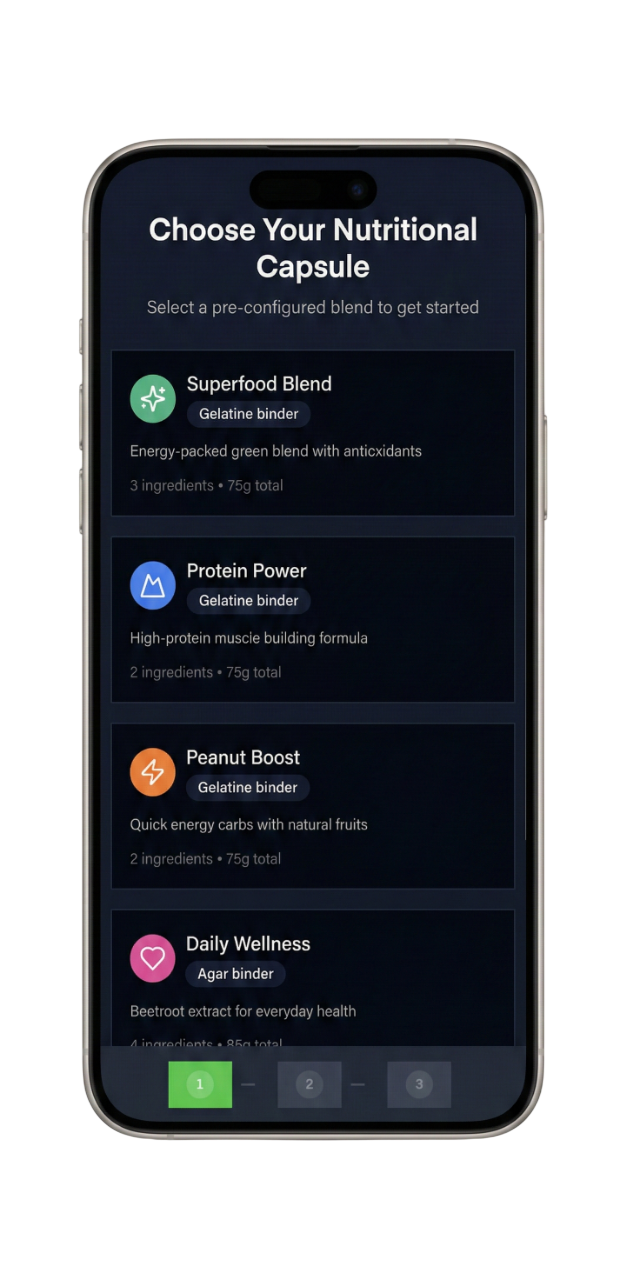
To make precision nutrition accessible, I built a bespoke web application. This interface allows users to personalise their snacks—adjusting macronutrients, selecting flavor profiles, and generating the exact G-code required by the ReformEat machine.
Custom Iconography
A custom set of intuitive icons was designed to represent complex nutritional data, slicing parameters, and hardware statuses cleanly across all screen sizes.